Flat Tire Assistance in Phoenix: Mobile Support for Safer Roadside Repairs
A flat tire in Phoenix rarely happens at a convenient time. It shows up on the Loop 202 during afternoon traffic, in a grocery store parking lot in Mesa, outside an office park in Tempe, or on a dark shoulder after a long day. The problem is not just the tire itself. It is heat radiating off the pavement, fast-moving traffic a few feet away, uncertain ground conditions, and the simple fact that many drivers no longer carry a usable spare, a proper jack, or the confidence to change a wheel safely.
That is where mobile roadside assistance earns its value. A good service does more than swap a damaged tire. It reduces risk, brings the right tools to the vehicle, and makes a stressful roadside situation more controlled. In a city as spread out and fast-moving as Phoenix, flat tire assistance is often less about convenience and more about safety, judgment, and response time.
Drivers searching for roadside assistance near me or flat tire repair near me are usually not comparing features the way they would shop for a new battery or set of tires. They need help now, they need clear communication, and they need someone who understands local driving conditions. Phoenix presents its own challenges, and those challenges shape how smart roadside repair should be handled.
Why flat tires are different in Phoenix
Phoenix roads put unusual stress on tires. Summer pavement temperatures can climb high enough to magnify every weak spot in a worn sidewall. A tire that was already low on pressure in the morning can become unstable by late afternoon. Add construction debris, gravel from shoulder lanes, curb impact, and underinflation, and tire trouble becomes common even for careful drivers.

Heat matters more than many people realize. Rubber degrades faster in extreme temperatures, especially when maintenance slips. A tire that still looks acceptable at a glance may have hidden damage from dry rot, previous punctures, or repeated low-pressure operation. That is one reason a seemingly simple flat can become more complicated on the roadside. Sometimes the issue is a nail in the tread and a clean tire swap solves it. Other times the sidewall is split, the wheel is bent, or the lug nuts are seized so tightly that a small trunk wrench is useless.
Phoenix also has a lot of vehicles that travel long suburban distances every day. Commuters move between Gilbert, Chandler, Scottsdale, and central Phoenix without much thought, until a warning light comes on miles from home. Someone looking for roadside assistance Gilbert AZ may be parked in a neighborhood cul-de-sac, while another person seeking roadside assistance Phoenix may be stranded on a busy arterial with almost no shoulder. The repair approach is not the same in both situations.
The real risks of changing a tire yourself
There is nothing wrong with knowing how to change a tire. In fact, every driver should understand the basics. The problem is that the safest procedure on paper can become a poor decision in the wrong environment.
A flat on a quiet residential street is one thing. A flat on Interstate 10 at dusk, with trucks passing at full speed, is another. If the ground is sloped, soft, broken, or narrow, a jack can shift. If the spare has not been checked in years, it may be underinflated or unusable. If the wheel is stuck from corrosion, what should be a ten-minute job can turn into twenty-five dangerous minutes crouched beside traffic.
There is also the physical side of the work. Lug nuts are often overtightened by impact tools at tire shops. Many people simply cannot break them loose with a factory wrench. Even if they can, lifting a wheel and aligning it correctly in heat that often pushes past 105 degrees is harder than most expect.
I have seen drivers do everything right and still end up in trouble because the conditions around them were wrong. One common scenario is the driver who tries to change the tire quickly to avoid delaying family plans, only to discover the spare well is jammed, the jack point is hard to find, or the lock key for the lug nuts is missing. Stress goes up, decision-making drops, and the shoulder does not get any safer with time.
That is the practical case for emergency roadside assistance. It is not just for people who do not know what they are doing. It is often the safer choice for people who do.
What mobile flat tire assistance actually includes
A professional mobile roadside assistance call for a flat tire usually begins with location verification, vehicle details, and a quick safety assessment. The service provider needs to know whether the car is in a traffic lane, on a shoulder, in a garage, or in a parking lot. They also need the make, model, and whether a spare tire is present. Those details affect dispatch decisions and determine whether the goal is a roadside swap or a tow recommendation.
Once on site, a capable technician will inspect the tire condition, confirm the car is stable to lift, and check whether the spare is roadworthy. This matters because not every flat should be handled with an immediate wheel change. A damaged sidewall, cracked spare, locking lug issue, or unsafe roadside position may point to a different plan.
When the conditions are suitable, the technician will secure the vehicle, loosen the lug nuts correctly, lift from the proper support point, mount the spare, torque the wheel as closely as roadside equipment allows, and advise on the next step. In many cases, that next step is not "you are all set for the week." It is "drive carefully to a tire shop now and keep speed low," especially if the spare is temporary.
That distinction matters. Good flat tire assistance is honest about limits. A donut spare is a short-term solution, not a full repair. A repaired puncture may be safe if it is in the tread area and professionally patched from the inside, but a roadside plug alone is not the same thing as a proper in-shop repair. Drivers looking for flat tire repair near me are often relieved just to be moving again, but they still need straight advice about what comes next.
When a repair is possible and when it is not
Not every flat tire can be repaired, and trying to save the wrong tire can cost more later. In general, punctures in the central tread area are the best candidates for repair, provided the tire has not been driven flat for long enough to damage the internal structure. Sidewall punctures, shoulder damage, exposed cords, splits, and large tears usually mean replacement.
The hidden factor is run-flat damage. A driver may only travel half a mile on a deflated tire to "get somewhere safer," yet that short distance can still crush the inner sidewall under the weight of the vehicle. From the outside, the damage may not look dramatic. Inside, the tire may already be compromised. That is why experienced roadside technicians are careful about promising a fix before inspecting the situation.
Wheel damage also complicates matters. In Phoenix, potholes are not the only concern. Curbs, construction zones, and road debris can bend a rim enough to cause air loss or make resealing impossible. In those cases, swapping to a spare may still get the driver moving, but the original wheel will need shop attention.
What drivers should do while waiting for help
The waiting period is where good decisions matter most. People often focus on response time, but what they do in those first ten minutes can make a bigger difference than the repair itself.
- Pull as far off the roadway as possible without driving on the flat longer than necessary.
- Turn on hazard lights and stay visible, especially at night or during dust and monsoon conditions.
- If traffic is close, remain inside the vehicle with your seatbelt on unless staying inside is clearly less safe.
- Share an exact location, including cross streets, freeway direction, mile markers, or parking lot landmarks.
- Keep pets and children secured and away from the roadside edge.
That checklist looks simple, but it prevents a lot of avoidable problems. The biggest mistake I see is drivers standing next to the damaged side of the vehicle while making calls or checking the tire. If traffic is close, step away from the exposed side or stay in the car. Another common mistake is accepting vague location descriptions. "Near the exit" is not enough in a metro area the size of Phoenix. Clear directions shorten delays.
The value of local knowledge in Phoenix and Gilbert
National dispatch systems can be helpful, but local familiarity still matters. A provider who works throughout the Valley understands traffic rhythms, the risk profiles of certain roads, and the practical difference between a call in downtown Phoenix and one in far southeast Gilbert.
For example, roadside assistance Gilbert AZ often involves master-planned neighborhoods, shopping centers, school pickup routes, and longer travel distances between commercial hubs. Access may be easy, but response can still depend on local route planning. Roadside assistance Phoenix can involve denser traffic, complex freeway interchanges, event congestion, and tight service access in garages or apartment communities.
This local knowledge helps with more than navigation. It helps with judgment. An experienced local dispatcher knows when a flat tire on a freeway shoulder calls for immediate escalation, when a tire change in a narrow lane is too risky, and when the better option is to coordinate towing instead of forcing a roadside repair. That is part of what separates genuine emergency roadside assistance from a one-size-fits-all response.
Flat tire calls often reveal bigger maintenance issues
A flat is sometimes just a flat. Other times, it is the event that exposes a broader problem with the vehicle. During a roadside tire change, technicians frequently notice worn tread across multiple tires, uneven wear from alignment issues, broken valve stems, damaged wheels, or a spare that has not held pressure in years.
This is especially common with vehicles that have not had regular tire inspections. Drivers may rotate tires on schedule and still miss age-related wear. In Arizona, time matters almost as much as mileage. A six-year-old tire with low mileage can still be near the end of its safe life if it has spent years baking in the heat.
It is also increasingly common for drivers to discover that their car does not come with a spare at all. Many newer vehicles include inflator kits instead of a compact spare. Those kits can help with small punctures, but they do not solve sidewall failures or blowouts. If the sealant has expired, been used before, or cannot handle the damage, the car is not going anywhere under its own power. That is when mobile roadside assistance becomes essential rather than optional.
The overlap between tire help and other roadside emergencies
Most roadside calls do not happen in isolation. A driver who hits debris and blows a tire may also damage the wheel. Someone stranded with a flat in a parking lot may discover the battery is weak after leaving the hazard lights on. Another driver who pulls over in frustration might realize the fuel gauge was lower than expected and now needs emergency fuel delivery as well.
That is why many people who first search for flat tire assistance end up needing a broader provider. The same company may also handle jump start service near me requests, car jump start service for drained batteries, fuel delivery near me for low-fuel emergencies, or car lockout service near me when keys are left inside during the confusion of a breakdown. A strong vehicle lockout service can be just as important on a hot Phoenix afternoon as a tire change.
There is practical value in working with a team that handles the full roadside picture. If the spare is unusable and the battery is dead, you do not want to make three separate calls. The same applies to emergency breakdown service in general. The best operators approach the scene as a whole problem, not a narrow ticket item.
What to ask when calling for roadside help
Not all roadside support is equal, and a few direct questions can save time. You do not need a long script, but you do need clarity. Ask whether the provider can perform an on-site tire change, whether they service your exact area, and whether they need you to supply a spare. Ask for an estimated arrival window, not just "someone is on the way." If you are in a risky position, say so plainly.
You should also tell them if you drive a vehicle with special considerations, such as oversized wheels, low ground clearance, aftermarket lug nuts, or a cargo load that makes access difficult. These details affect both equipment choice and technician safety.
The language people use when searching online often reflects urgency. They type emergency roadside assistance near me because they are stressed, not because they want a marketing promise. A service provider earns trust by responding with specifics: where they are, how long it may take, what they can do on site, and whether the location is safe for roadside work.
Response time matters, but judgment matters more
Everyone wants fast service. In Arizona heat, every extra minute feels longer. Still, speed roadside assistance near me without judgment can create bad outcomes. A rushed technician working too close to traffic, using the wrong lift point, or forcing a temporary fix onto an unsafe tire is not helping.
The better standard is prompt, calm, competent service. That includes arriving with appropriate safety gear, setting expectations clearly, and deciding whether the job should be completed where the car sits. Sometimes the most professional move is refusing to perform a tire change in a location that exposes everyone to unnecessary danger.
That may frustrate a driver in the moment, especially if they are only a few miles from home. Yet it is the right call when shoulder width, traffic speed, visibility, or surface conditions make the repair unsafe. Real emergency roadside assistance is not about saying yes to every request. It is about solving the problem responsibly.
A quick way to reduce your chance of getting stranded
Most roadside tire calls are preventable to some degree. Not all, but many. A few basic habits go a long way, especially in Phoenix.
- Check tire pressure monthly, not just when a warning light appears.
- Inspect tread and sidewalls for nails, cracks, bulges, and uneven wear.
- Verify that your spare, jack, and lug wrench are present and usable.
- Replace aging tires before summer heat exposes their weakness.
- Save the contact information for a trusted mobile roadside assistance provider before you need it.
These are simple steps, but they are the kind people skip until they are standing beside a disabled car. Pressure checks matter because underinflation is one of the fastest ways to shorten tire life in desert heat. Spare checks matter because many drivers assume the spare is ready when it has been flat for years. Contact preparation matters because nobody makes their best search decisions on the shoulder of a freeway.
Choosing support you would trust for family members
The easiest test for any roadside provider is this: would you tell a spouse, parent, or teenage driver to call them alone at night? If the answer is no, keep looking. Roadside service is partly mechanical skill and partly customer handling. The people answering the phone should communicate clearly. The technician should treat the scene professionally, explain what is happening, and avoid pressuring the driver into decisions that belong in a tire shop, not on a shoulder.
This is especially important for younger drivers and older adults who may not feel comfortable assessing whether advice is sound. A provider should explain whether the spare has speed and distance limits, whether the original tire looks repairable, and whether a tow is safer than a temporary swap. Professional service leaves the driver more informed than before, not more confused.
What safer roadside repair looks like in practice
Safer roadside tire service is not glamorous. It is careful positioning, proper tools, clear instructions, and the discipline to know when not to proceed. It is a technician who notices the spare is at half pressure and addresses that before sending the driver back into traffic. It is a dispatcher who asks enough questions to understand whether the vehicle is in a genuinely hazardous location. It is the difference between simply changing a wheel and actually managing a roadside incident.
In a metro area like Phoenix, that distinction matters every day. The roads are busy, distances are long, and the climate is hard on vehicles. Drivers need more than a generic promise of help. They need responsive, local, mobile support that understands the realities of the Valley, from roadside assistance Phoenix calls on major corridors to roadside assistance Gilbert AZ requests in fast-growing neighborhoods.
When a tire fails, the best outcome is not just getting moving again. It is getting home, to work, or to a repair shop without turning a minor breakdown into a dangerous roadside event. That is the real purpose of flat tire assistance, and the reason mobile support continues to matter for drivers across Phoenix every single day.
Our Sponsor
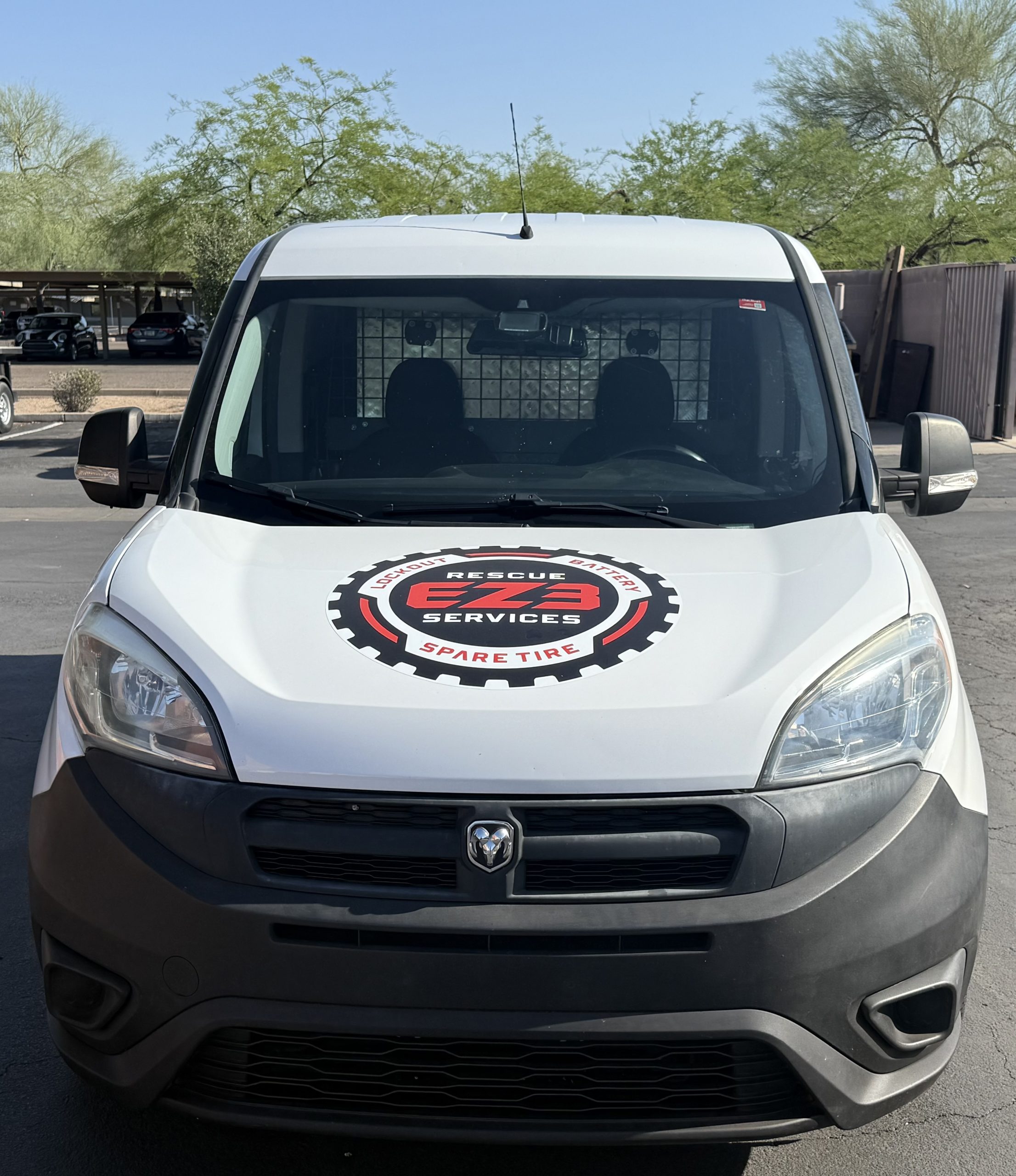
EZ3 Roadside Rescue Services
EZ3 Roadside Rescue Services is a Gilbert-based roadside assistance provider serving drivers throughout Gilbert and the greater Phoenix, Arizona area. The company provides fast, professional roadside assistance for common vehicle emergencies, including flat tire repair and tire changes, battery jump starts, emergency fuel delivery, vehicle lockout assistance, lug nut removal, battery replacement, and emergency breakdown assistance. EZ3 Roadside Rescue Services is available 24/7 to help stranded motorists get safely back on the road.
Address:
922 N Colorado St,
Gilbert,
AZ
85233,
United States
Phone: (480) 710-5902
Business Hours:
- Open 24/7 — Emergency Roadside Assistance Available
Follow Us: